

It is a little after four in the afternoon. You pull in, press the remote, and the door starts down, then stops and goes right back up. You try again and get the same thing. An hour later, after the sun drops behind the house across the street, the door closes on the first try as if nothing was ever wrong. If that pattern sounds familiar, your door is not haunted and your opener is probably not failing. The sun is shining straight into one of the safety sensors, and once you know that, the fix is usually simple.
Across California, Door-Mart Garage Doors gets a wave of these calls every fall as the sun sits lower in the sky, and our hundreds of positive reviews on Google, Yelp, HomeAdvisor, and Angi include plenty of homeowners who were relieved to learn the cure was a sensor swap, not a new opener.
If your door only fails at certain times of day, or works on cloudy days but not sunny ones, this article explains why and what fixes it for good. For same-day service, call 1-800-829-9833, email info@doormartgaragedoors.com, or request service online.
Quick Answer: Can Sunlight Stop a Garage Door From Closing?
Yes. Garage door safety sensors use an infrared beam, and direct sunlight contains strong infrared light. When the sun shines straight into the receiving sensor, it can drown out the beam, so the opener thinks something is blocking the doorway and refuses to close. Shading or repositioning the receiver usually solves it.
Why Does Sunlight Confuse Garage Door Sensors?
The safety sensors at the bottom of your door tracks work as a pair. One sensor sends an invisible infrared beam across the opening, and the other receives it. As long as the receiver detects that beam, the opener knows the doorway is clear and allows the door to close.
Sunlight is full of infrared light too. When the sun hits the receiving sensor’s lens at the right angle, the sensor is flooded with far more infrared than the sending sensor produces. It can no longer pick out the beam it is supposed to watch for, and from the opener’s point of view, a missing beam means something is in the way.
The result is the same response you would get if a child stepped into the doorway. The door stops and reverses, or never starts down at all. On many LiftMaster and Chamberlain openers, the light on the motor unit will blink about 10 times to signal a sensor problem.
The sending sensor does not care much about sunlight. It is the receiving sensor, the one usually marked with a green indicator light on those brands, that gets blinded. That detail matters for the fix.
Why Does This Happen More in Fall and Winter?
In summer, the midday sun sits high overhead, so its light hits the driveway and the top of the door rather than the sensors near the floor. As fall arrives, the sun travels lower across the sky. Early morning and late afternoon light comes in at a shallow angle, and for garages facing east or west, that angle can point straight down the driveway and into a sensor lens a few inches off the floor.
Timing makes it worse. After the clocks fall back in early November, the evening commute lines up with sunset across much of California. That puts the lowest, most direct sun of the day right at the moment most people are pulling in and closing the door.
Homeowners often notice the problem suddenly, in the same few weeks each year, and then see it disappear in spring. The sensors did not change. The sun’s path did.
How Can You Tell Sun Glare Is the Problem?
Sunlight interference has a recognizable pattern. It is very likely the cause if:
- The door fails at the same time each day, usually early morning or late afternoon.
- It works on cloudy days, after sunset, or once a shadow covers the driveway.
- The receiving sensor’s light flickers or goes out when sunlight hits it, then comes back when shaded.
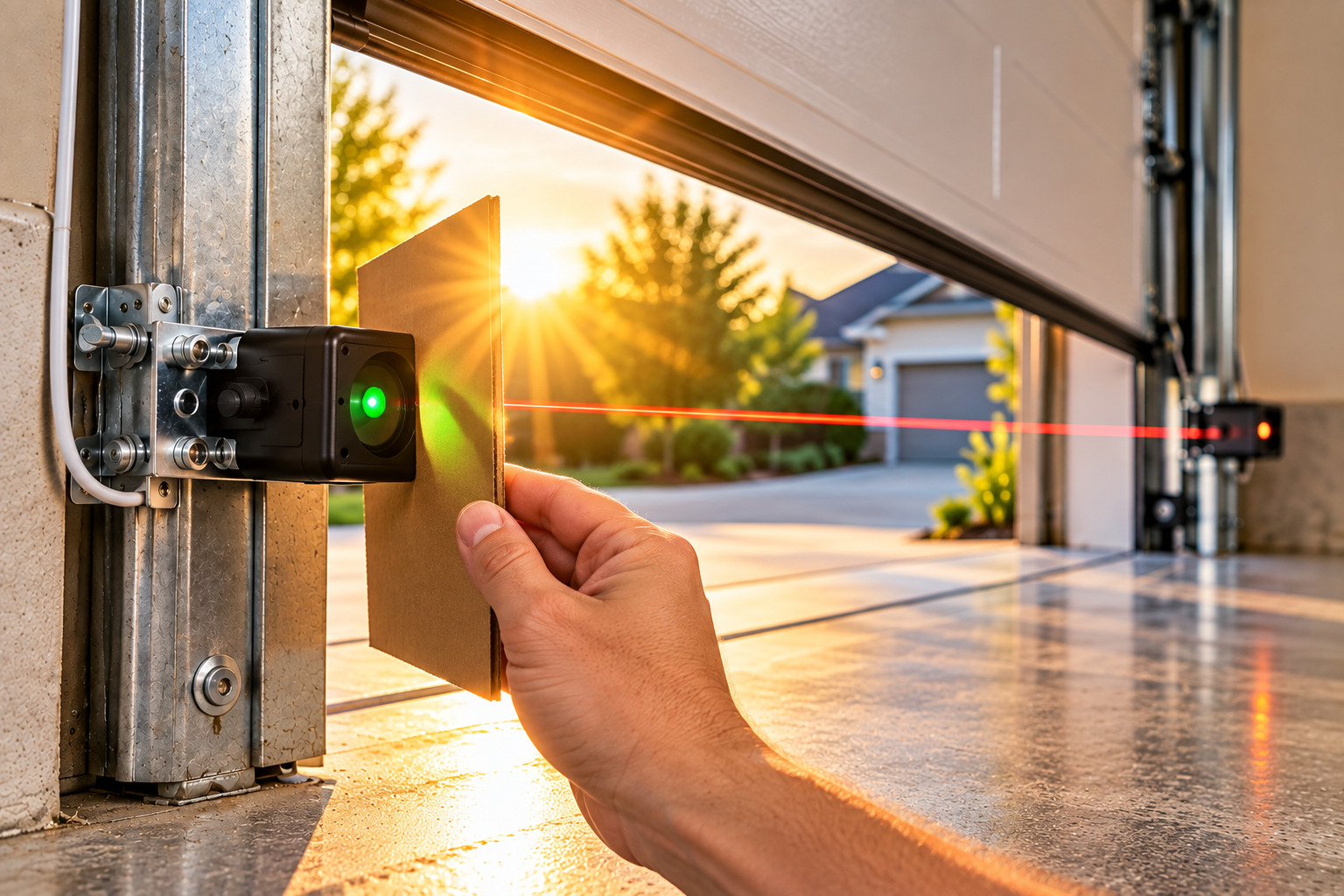
- Shading the receiver with your hand or a piece of cardboard lets the door close normally.
- The opener light blinks in its sensor-error pattern only during those sunny windows.
- Everything checks out at other times, including alignment and indicator lights.
That hand test is the quickest confirmation. Stand to the side so you are not in the beam, cast a shadow over the receiving lens, and press the wall button. If the door closes, you have found your problem.
How Do You Fix a Garage Door Sensor Sunlight Problem?
Start with the simplest fixes and move down the list:
- Clean both lenses. A dusty lens weakens the beam, which makes it easier for sunlight to overpower. Wipe both with a soft, dry cloth.
- Check alignment. Sensors that are slightly off-target receive a weaker beam and are more easily blinded. Adjust until both indicator lights are steady.
- Swap the sensors to opposite sides. This is the fix that works most often. Moving the receiving sensor to the side of the door that stays shaded during the problem hours keeps sunlight off the lens that matters. It usually means swapping the sensors between brackets and re-routing the wires, then realigning.
- Add a sun shield. A short hood or tube over the receiving lens blocks light coming in at an angle while still allowing the straight-on beam through. Some manufacturers make shields for their sensors. A short section of tube aimed carefully at the sender can do the same job.
- Adjust the mounting position. Moving a sensor slightly back into the door frame or tilting the bracket can take it out of the sun’s path. Keep the beam no higher than six inches above the floor, which is the height safety guidance calls for.
- Upgrade older sensors. Newer sensor designs tend to handle stray light better than older models. Any replacement has to be compatible with your opener’s brand and model.
What not to do: never tape the sensors together, mount them high on the wall, or disconnect them to stop the problem. Those changes remove the safety reversal that keeps a closing door from striking a person or pet.
If swapping or shielding the sensors feels like more than you want to take on, it is a quick job during a garage door opener repair visit.
Why Won’t My Garage Door Close in Hot Weather?
Not every hot-day closing problem is sunlight in the sensors. Heat affects other parts of the system too, and these are worth ruling out:
Metal expands. Steel doors and tracks grow slightly in the heat. On a door that is already a little tight in its tracks, that expansion can create enough drag for the opener to sense resistance and reverse.
The opener overheats. Openers have thermal protection. In a very hot garage, several cycles in a row can trip it, and the opener will stop responding until the motor cools down.
Lubricant dries out. Grease on rollers, hinges, and springs thins and dries faster in heat, adding friction to every cycle. Using the right lubricant for your garage door makes a difference here.
Brackets loosen. Plastic sensor brackets and housings can soften or shift slightly in sustained heat, nudging the sensors out of alignment.
The bottom seal sticks. A rubber bottom seal can stick to hot concrete or a hot threshold, and the opener may read the extra pull on the next opening as a problem.
Rollers are worn. Heat makes a marginal roller worse. Cracked or flat-spotted rollers bind in the track, and roller replacement usually solves the drag.
If your door fails only in the sun, look at the sensors. If it fails throughout hot afternoons whether the sensors are shaded or not, the door itself likely needs attention through residential garage door repair.
Which California Homes See Sensor Glare the Most?
West-facing garages in the Central Valley. In Modesto, Turlock, Fresno, Bakersfield, and Visalia, long, flat streets and clear afternoon skies send low sun straight down driveways. These are some of the most common sunlight calls we get.
Sacramento-area subdivisions. In Elk Grove, Roseville, Citrus Heights, and Rancho Cordova, newer neighborhoods often have rows of garages facing the same direction, so a whole street can see the problem in the same weeks.
East Bay and Tri-Valley hillsides. In Concord, Walnut Creek, Livermore, and Pleasanton, homes on slopes with open views to the east or west catch low sun that flat lots would block.
Clear northern skies. In Redding, Anderson, and Chico, bright winter sun and fewer foggy days mean glare problems persist through much of the season.
Coastal homes in San Francisco and Pacifica see this less often, since fog filters the low sun, but they tend to have more trouble with moisture on sensor lenses instead. Our 5 pro tips for garage door maintenance in California cover how to keep lenses and hardware in shape for each climate.
When Should You Call a Technician?
Sunlight problems are often easy to fix, but some situations are better handled by a professional:
- The receiving light stays off even when the sensor is fully shaded.
- Swapping sides would require running new wire around the opening.
- A sensor bracket is bent or the sensor housing is cracked.
- The door fails at random times, not just in the sun.
- The door reverses even when the sensor lights are steady.
- You notice grinding, jerking, or a heavy, uneven door alongside the sensor problem.
A routine residential garage door maintenance visit includes sensor alignment and an auto-reverse safety test, and it is a good time to ask about sun shields if your garage faces east or west. If the door is stuck open and you cannot secure your home, our 24/7 emergency garage door service can help.
The Bottom Line
A garage door that refuses to close only during certain hours, and works fine once the sun moves, almost always has sunlight shining into the receiving sensor. The infrared in direct sunlight overwhelms the sensor beam, and the opener reacts as if something is in the doorway.
Confirm it by shading the receiver and trying the door. Then fix it by cleaning and aligning the sensors, moving the receiver to the shaded side, or adding a sun shield.
Keep the sensors within six inches of the floor and never disable them. If the door also struggles in hot weather when the sensors are shaded, the tracks, rollers, lubrication, or opener need a look.
Frequently Asked Questions About Garage Door Sensors and Sunlight
Can sunlight prevent a garage door from closing?
Yes. Direct sunlight contains a lot of infrared light, which can overwhelm the receiving safety sensor so it no longer detects the beam from the sending sensor. The opener then treats the doorway as blocked and will not close the door. It usually happens in early morning or late afternoon when the sun is low.
Why won’t my garage door close in hot weather?
Sunlight shining into the sensors is one common cause, but heat can also make metal tracks and doors expand, dry out lubricant, soften sensor brackets, and trip the opener’s thermal protection. Any of these can cause the door to stop or reverse. If the door also fails when the sensors are shaded, the issue is likely mechanical.
How can I fix a sunlight problem with my garage door sensor?
The most reliable fix is moving the receiving sensor to the side of the door that stays shaded during the problem hours, then realigning both sensors. Adding a sun shield or short hood over the receiving lens also works well. Cleaning the lenses and tightening alignment help the sensors hold a stronger signal.
How to shield garage door sensors from sunlight?
Fit a small hood or tube over the receiving sensor’s lens so it blocks light coming in at an angle while still allowing the straight-on beam from the other sensor. Some manufacturers sell shields made for their sensors. Make sure the shield does not block the beam path and that the sensors stay no higher than six inches off the floor.
What are the signs of a bad garage door sensor?
Signs include an indicator light that stays off or flickers even after cleaning and alignment, a door that reverses at random times regardless of sunlight, moisture inside the sensor housing, and a cracked lens. If shading and realigning the sensor makes no difference, the sensor or its wiring likely needs replacing.
How do I know if my garage door sensors are working?
Check that both indicator lights are steady, then place an object like a cardboard box in the doorway and try to close the door. Working sensors will stop the door and send it back up before it reaches the object. If the door keeps closing, stop it immediately and have the sensors inspected.
📞 Call us at 1-800-829-9833,
✉️ email info@doormartgaragedoors.com.
🗓️ Book an appointment online; same-day service available across California.
Licensed California Contractor, CA License #898715


